
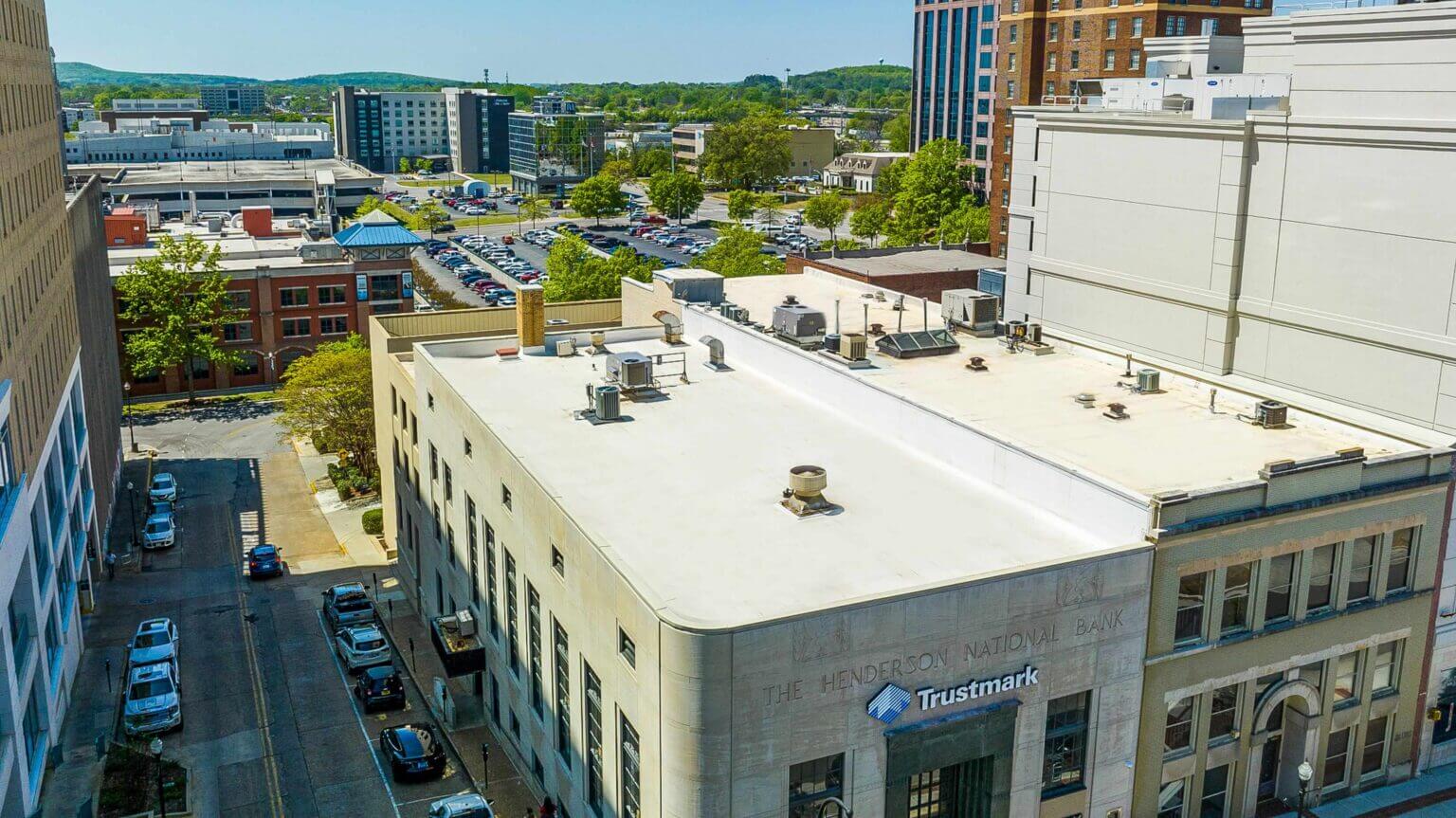
If you manage or own a commercial building in Middle Tennessee, you’ve likely encountered this question at some point: TPO or EPDM? Both are single-ply membrane systems. Both are widely used on low-slope commercial roofs. And both have real strengths, which is exactly why the debate persists.
The honest answer is that neither system is universally better. The right choice depends on your building, your priorities, and your location. In Middle Tennessee, where summers are long, humid, and punishing, that last factor matters more than most people realize.
After 70 years of installing, servicing, and managing commercial roofs across the Mid-State, our team at Maxwell has seen how both systems perform over time on real buildings in real conditions. Here’s what we know:
A Guide to Commercial Roofing Material Options
TPO (Thermoplastic Polyolefin) is a white or light-colored single-ply membrane that reflects UV rays. It has heat-welded seams, which create a strong, watertight bond when installed correctly.
EPDM (Ethylene Propylene Diene Monomer) is a synthetic rubber membrane, traditionally black, that has been used in commercial roofing for decades. It’s known for its flexibility, durability, and relatively straightforward repair process. EPDM seams are typically adhered with tape or bonding adhesive.
Both systems are installed on low-slope commercial roofs and are available in multiple thicknesses, and both can last 20–30 years or more with proper maintenance. To determine which material is best for your specific project, it’s best to assess the conditions your commercial roof will face.
What Middle Tennessee’s Climate Demands from a Roof
Before comparing the two systems head-to-head, it’s worth acknowledging the specific pressures that Middle Tennessee puts on any commercial roof.
Nashville and the surrounding region experience hot, humid summers with temperatures regularly climbing into the 90s and heat index values that push well beyond that. That heat is compounded by high humidity, which creates moisture stress on roofing materials year-round. Thermal cycling (the daily expansion and contraction of materials as temperatures rise and fall) is significant in the Southeast, and seams and flashing details bear the brunt of that stress over time.
The region also sees active spring storm seasons, including hail, heavy rain, and high winds. A roof that holds up well in summer heat also needs to be resilient enough to take a beating from a mid-April storm system. With that context in mind, here’s how TPO and EPDM stack up.
Energy Efficiency and HVAC Strain
Energy use is where TPO has a clear and meaningful advantage in our climate.
TPO’s white reflective surface deflects solar heat before it enters the building. On a 95-degree day in Nashville, a TPO roof can stay significantly cooler than a dark-colored surface, reducing heat transfer into the building and lowering the demand on your HVAC system during the months when it’s working hardest.
Traditional EPDM is black, which means it absorbs heat. Roof surface temperatures on a black EPDM membrane can run dramatically higher than the ambient air temperature on a sunny summer day. That heat has to go somewhere, and a portion of it transfers into the building, increasing cooling loads.
For buildings with high cooling demands, such as distribution centers, retail facilities, office buildings, and manufacturing facilities, this difference can translate to meaningful savings over the life of the roof. In climates that require additional indoor heating, EPDM’s heat absorption could be considered a mild advantage, but Middle Tennessee is not that climate. Our cooling season is long and expensive, and energy efficiency should factor heavily into the decision.
Key Takeaway: In Middle Tennessee’s heat and humidity, TPO’s reflective surface offers a real, ongoing operating cost advantage.
Maintenance Over Time: The 10-Year Picture
If you place two identical buildings side by side, one with TPO and one with EPDM, and check back in 10 years, here’s what the maintenance story typically looks like.
TPO at 10 years:
TPO’s heat-welded seams are a genuine strength early in a roof’s life. A well-installed TPO roof should perform cleanly for many years with minimal intervention. However, as the membrane ages, UV exposure and the thermal cycling that Middle Tennessee delivers year after year can accelerate wear at seams and flashing details, especially if the original installation wasn’t precise. Seam fatigue, brittleness in lower-quality membranes, and more frequent touch-ups around penetrations are the most common maintenance issues we see. The quality of the membrane and the quality of the installation matter enormously with TPO. It rewards good workmanship and punishes shortcuts.
EPDM at 10 years:
EPDM tends to age more predictably. Its rubber composition maintains flexibility over time, which helps it handle thermal cycling without the same level of stress on seams. After a decade, EPDM roofs in good condition typically show minimal membrane degradation, with maintenance issues concentrated in isolated areas rather than system-wide concerns. Perhaps most importantly, EPDM is forgiving to repair. Patches adhere cleanly, and the repair process is straightforward even on an aging membrane.
Key Takeaway: TPO may require more proactive attention at seams and details as it ages. EPDM generally delivers steadier, more predictable long-term performance with simpler repairs. That said, a well-maintained TPO roof from a reputable manufacturer, installed by an experienced contractor like Maxwell, can absolutely reach and exceed its expected service life.
This is one area where having a preventative maintenance program like MAXCare® pays dividends regardless of which system you choose. Catching seam issues or flashing wear early, before they become leaks, is far less expensive than reactive repairs after water has entered the building.
Durability and Resistance to Middle Tennessee Conditions
Both systems handle rainfall and standing water well when properly installed and maintained. The differences show up in a few specific conditions relevant to this region.
Hail and Impact Resistance
EPDM has a slight edge here due to its rubber composition, which absorbs impact rather than cracking under it. TPO membranes vary in hail resistance depending on thickness and manufacturer. Thicker membranes (60-mil or higher) perform significantly better than thinner options.
Rooftop Traffic
Buildings with high rooftop activity tend to be better served by EPDM. Its flexibility and forgiving surface make it more tolerant of foot traffic and the occasional tool or equipment contact. If your building requires regular visits from HVAC techs, plumbers, or other trades, that’s worth factoring in.
Penetrations
Buildings with many rooftop penetrations (RTUs, pipes, drains, equipment curbs) require careful detailing around each one. EPDM is generally considered more adaptable in complex, heavily penetrated roofscapes. TPO can handle penetrations well, but the detailing must be precise. A weak flashing on a TPO roof is a more common source of problems than on EPDM.
Which System Is Right for Your Building?
There’s no universal answer, but there is a useful framework.
TPO tends to be the better choice when:
- Your building has large, open roof sections with fewer penetrations (distribution centers, big-box retail, warehouses)
- Energy efficiency and lower cooling costs are a priority
- The building owner wants a clean, professional-looking white roof
EPDM tends to be the better choice when:
- Your roof has significant penetrations, equipment, or complex detailing
- The building sees frequent rooftop traffic
- You’re re-roofing an older building where flexibility and adaptability matter
- Long-term ease of repair and serviceability outweigh energy efficiency considerations
Key Takeaway: There is no universal “best.” The right answer often comes down to whichever best aligns with the building’s demands. But remember, an experienced contractor also matters. A properly installed and proactively maintained TPO or EPDM roof will outperform a poorly installed version every time.
Not Sure Which System Is Right for Your Roof?
At Maxwell, we’ve been installing both TPO and EPDM systems across Middle Tennessee and North Alabama for decades. We get involved early in the planning process, consider the building’s specific demands, and build a recommendation around what will actually perform, not what’s cheapest on the bid sheet.
The best decisions start with the right information. If you’re evaluating a new roof, planning a replacement, or just trying to understand what your current system needs, our team is here to help. Request a quote or contact us to talk about your commercial roofing needs.