
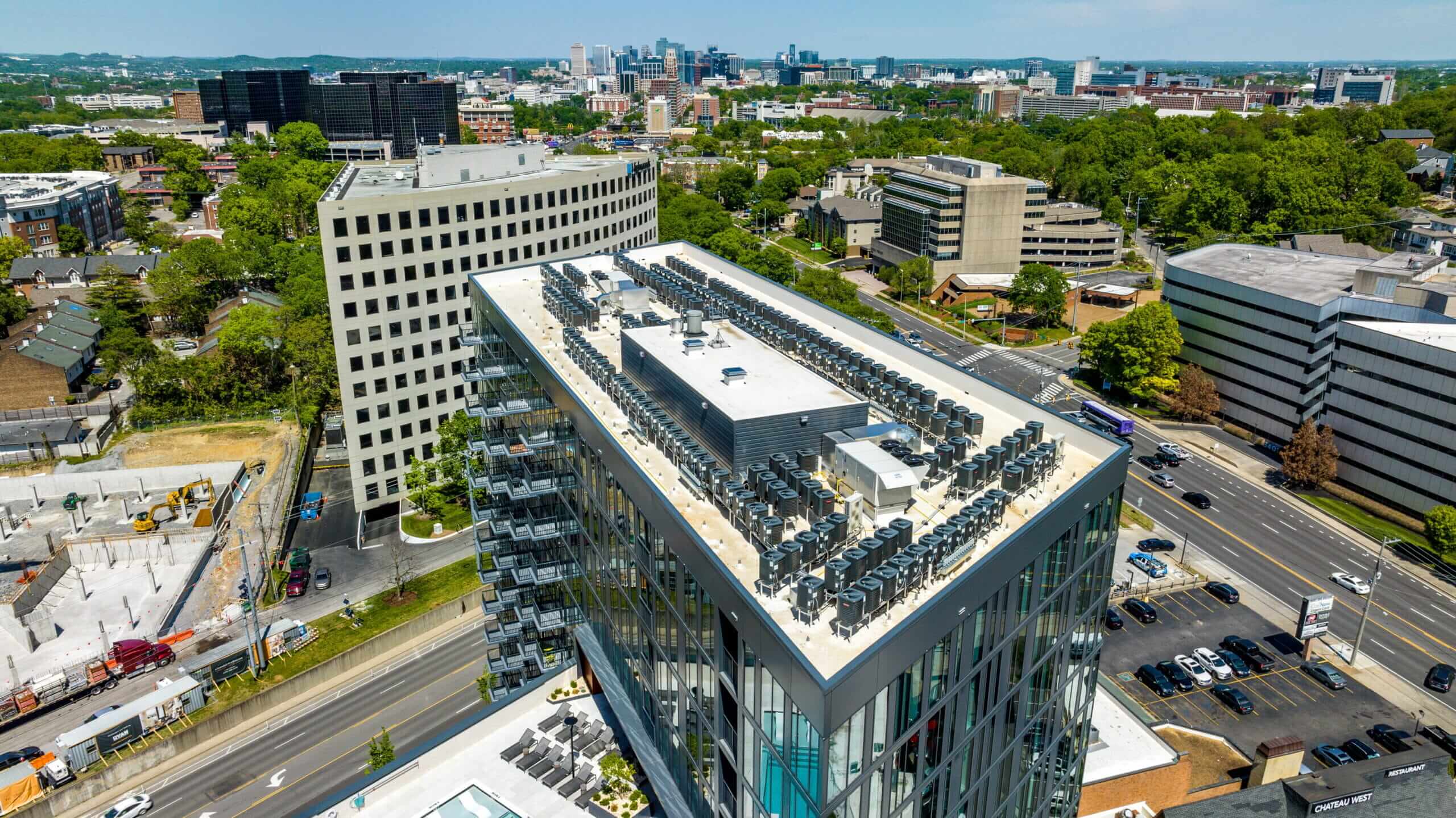
A commercial roof is no longer just a cap on a building—it can now become a sophisticated architectural element. From vegetated terraces to custom logos and rooftop bars, a roof can play a vital role in a building’s aesthetic and function. For architects and general contractors around Nashville and Huntsville, this evolution brings with it opportunity and complexity.
At Maxwell Roofing & Sheet Metal, we help GCs and design teams execute complex architectural visions. Our approach combines decades of hands-on experience with a collaborative approach, ensuring every element of the roof contributes to a lasting, weather-ready structure.
Key Roofing Decisions That Shape Design and Performance
Here are four key architectural considerations that general contractors and design teams should address early in the planning process for any roofing project:
1. Roof Slope and Drainage Shape Long-Term Performance
The slope of a commercial roof influences how well it drains, how it connects to other building components, and how it handles weather. Poor drainage often leads to ponding water, membrane stress, and a shortened roof life. Architects can prevent these issues by planning slopes that move water efficiently to interior or exterior drains.
Drain placement also affects constructability. Coordinating early helps architects avoid drawings that require drains in tight or inaccessible areas. Correct placement keeps water moving and helps maintenance teams service the drains safely.
Project Example: The Tennessee State Library & Archives required a roof system that protected a large, modern, 165,000-square-foot building. Our team installed a Gray Fleeceback TPO roof that performs well in heavy storms and during temperature swings. Early discussions about drainage, slope, and waterproofing helped keep the building envelope protected through challenging weather and pandemic delays. Thoughtful planning ensured the new facility would preserve Tennessee’s history under a roof built to last.
2. Curbs, Penetrations, and Other Details Need Early Attention
Curb installations and rooftop penetrations create some of the most common points of roof failure. Incorrect sizing or placement of these elements makes flashing more difficult and creates long-term risks for water intrusion. When architects bring a roofing specialist into the design process, they often discover small adjustments that increase the overall reliability of the roof. This is especially true for roofs with heavy mechanical use, rooftop bars, or public access.
Project Example: The Thompson Hotel is one of Nashville’s most popular destinations. The rooftop bar and terrace required a customized look while still meeting strict safety and waterproofing needs. Maxwell Roofing worked closely with the hotel team to coordinate curb placements, slope transitions, and structural requirements. This collaboration helped the design team achieve its goals while maintaining the durability expected from a high-traffic roof.
3. Material Selection Impacts Design and Constructability
The choice of roofing material extends far beyond color and texture. Material selection also affects fire ratings, energy efficiency, attachment methods, maintenance needs, and roof life expectancy. Architects who plan for these realities early often protect their schedules and budgets.
Maxwell Roofing frequently advises design teams during material evaluations. We work with GCs and design teams to choose the best roofing system that matches your aesthetic vision while delivering maximum durability.
Project Example: The Community Foundation of Middle TN Headquarters project demonstrates how collaborative discussions support both design and performance goals. After reviewing several options, Maxwell recommended a Dutch seam metal roof with an adhered TPO underlayment. This choice created a clean, modern appearance that matched the building’s design. It also delivered a durable system that would age well over time.
4. Architectural Expression on the Rooftop
Many architects now use the roof as a canvas for visual storytelling. Large logos, bold colors, and unique shapes help buildings stand out in dense urban environments. These design choices require precise technical planning to ensure the visual elements do not compromise performance.
Project Example: The Frist Art Museum is a historic 1930s landmark, and the reroofing process required careful planning to protect its architectural character. Maxwell Roofing worked with the project team to introduce a distinctive design feature: a large-scale logo placed across the roof. This addition served both branding and functional goals, and it required a thoughtful approach to fastening, waterproofing, and compatibility with the existing structure. The result honored the building’s history while adding a modern element visible from above.
Why Architects Benefit from a Collaborative Roofing Partner
Commercial roofing presents many variables that influence how a design performs over time. When architects involve a trusted roofing contractor early, they gain immediate clarity on constructability, long-term maintenance expectations, and material performance. A proactive partnership can strengthen the design elements and protect the project owner’s investment.
If you are a project owner or general contractor looking for a trusted contractor for commercial roofing projects near Nashville or Huntsville, let’s work together. Contact our team to bring decades of proven experience to your next design.